Starting your fitness journey can feel overwhelming. You might wonder: Should you train your whole body at once or split your body parts across different days? How often should you work out? And what does “progressive overload” even mean?
At The Imp Muscle, we make strength training simple, clear, and safe for everyone. Here is everything you need to know to start smart and build real strength.
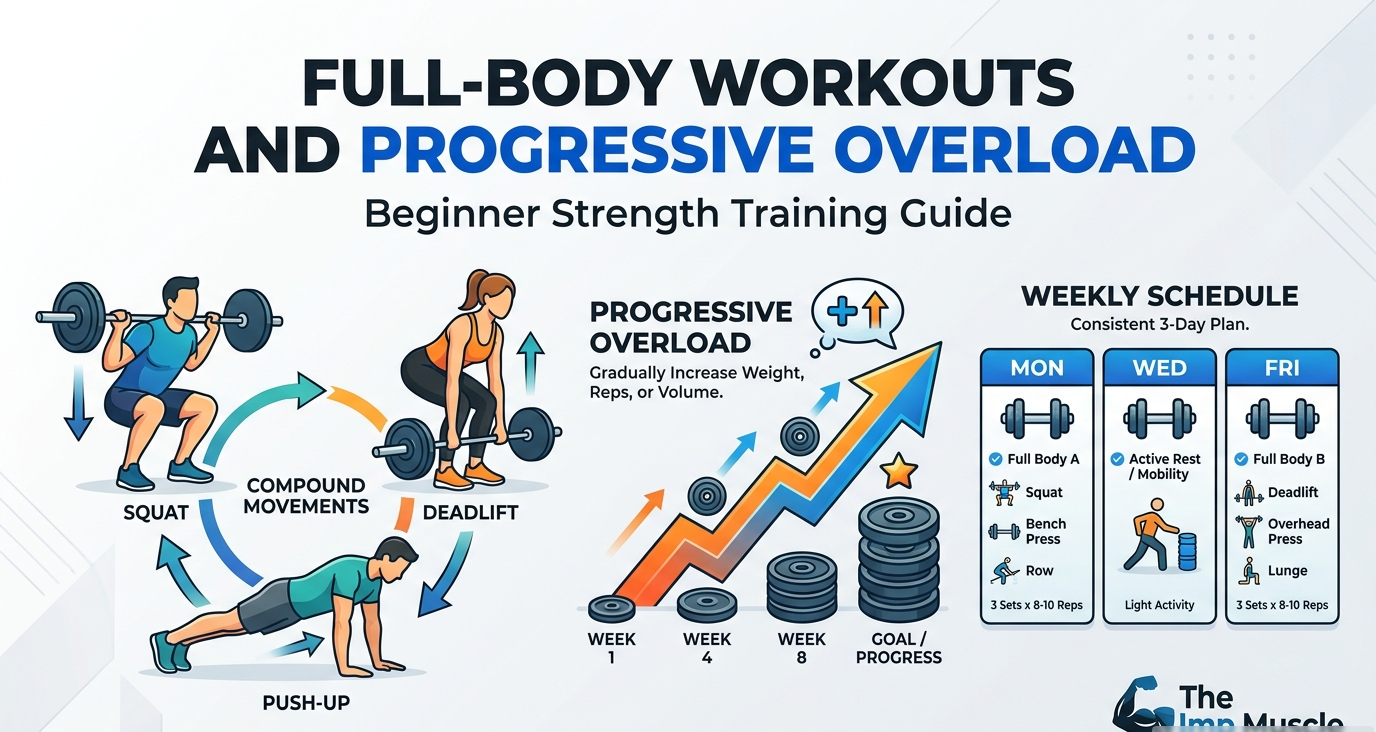
1. Full-Body Workouts vs. Split Routines: Which One Should You Choose?
When you plan your weekly workouts, you usually choose between two main training styles:
Full-Body Workouts
- What it is: You train all your major muscle groups—like your chest, back, legs, shoulders, and core—in a single workout session[1].
- Best for: Beginners and busy adults who can only workout 2 to 3 days a week.
- Why it works: Full-body sessions focus on high-yield compound moves (like squats, rows, and push-ups)[1]. You hit each muscle group 2 to 3 times every week, which helps you learn exercise form quickly and build balanced strength[1].
Split Routines
- What it is: You split your workout by muscle groups on different days. For example, training your upper body on Monday and your lower body on Tuesday.
- Best for: Intermediate lifters who workout 4 to 6 days a week and need more time to focus on specific muscle details.
Which one is best for you?
If you are a beginner, start with full-body workouts 3 times a week. It saves time, gives your body plenty of rest days, and builds a solid strength foundation fast[1].
2. What Is Progressive Overload? (The Simple Way to Get Stronger)
Progressive overload sounds complex, but the idea is very simple: you must gradually make your workouts slightly harder over time so your body continues to adapt and grow.
If you lift the exact same 5 kg weight for 8 reps every single week for a year, your body gets used to it and stops changing. To get stronger, you must give your muscles a small, new challenge.
3 Easy Ways to Practice Progressive Overload:
- Add a Little Weight: Increase your dumbbell weight slightly (for example, moving from 5 kg to 6 kg).
- Do More Reps: If you did 8 reps last week, try to do 9 or 10 reps this week with clean form.
- Improve Your Form & Control: Perform the same exercise with slower, smoother control and better depth.
3. How Often Should You Train Each Muscle Group Weekly?
To get maximum results without overtraining, aim to train each major muscle group 2 times per week.
Your muscles need stimulus to grow, but they also need 48 hours of rest to repair and build new tissue.
Simple 3-Day Beginner Full-Body Schedule:
- Monday: Full-Body Workout (Squats, Push-Ups, Rows, and Core)[1]
- Tuesday: Rest or Light Walking
- Wednesday: Full-Body Workout (Deadlifts, Overhead Press, Glute Bridges)[1]
- Thursday: Rest or Gentle Stretching
- Friday: Full-Body Workout (Goblet Squats, Bench Press, Inverted Rows)[1]
- Saturday & Sunday: Rest and Active Recovery
Simple Rules to Remember
- Prioritize Form Over Weight: Always master safe movement mechanics before adding heavy weights.
- Rest Is Mandatory: Muscle growth happens when you sleep and rest, not while you are lifting in the gym.
- Stay Consistent: Doing 3 simple workouts every week consistently beats doing 6 intense workouts for one week and quitting.
Start Building Your Strength Engine Today
Fitness does not have to be confusing. Stick to simple full-body movements, apply progressive overload week by week, and give your body rest. The Imp Muscle is here to guide you every step of the way!